

Biosecurity is often reduced to a checklist: wash the trailer, change boots, control visitors and keep rodents out. Those practices are important, but effective wean-to-finish health management requires a broader approach.
The goal is to understand how pathogens can enter a site, move among pigs and leave the farm, then build practical procedures around those risks.
For producers and veterinarians, success comes down to protecting herd health while making protocols simple enough to follow correctly, every day.
Identify the Farm’s Biggest Risks
Every site has a different risk profile. A farm surrounded by other swine operations faces different challenges than an isolated site. Likewise, a farm receiving pigs from multiple sources requires different controls than one using a single, high-health source.
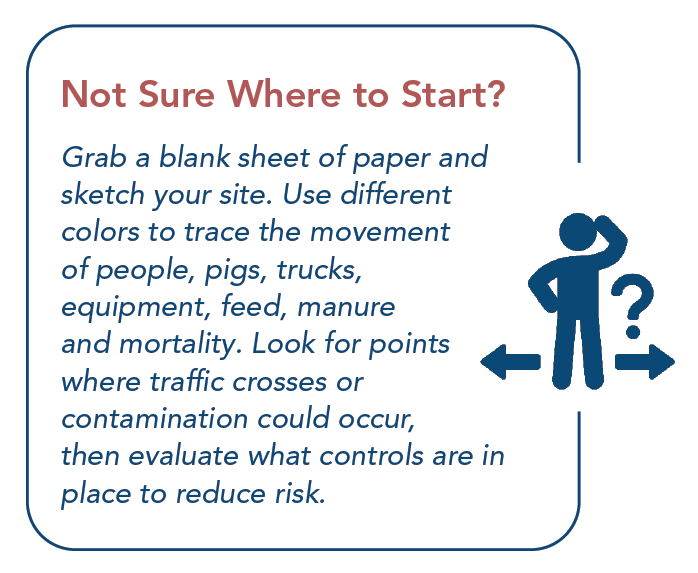
Start by mapping the movement of people, pigs, trucks, equipment, feed, manure and mortality. For each, consider where contamination could occur and what controls are in place. This exercise often reveals vulnerabilities that aren’t obvious when biosecurity is viewed simply as a checklist.
Make Entry Procedures Routine
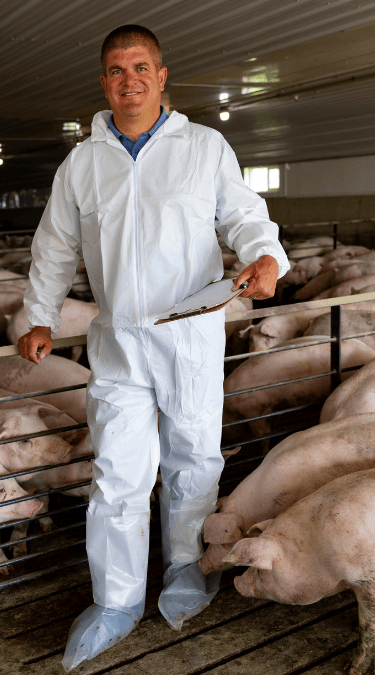
The perimeter buffer area and line of separation provide the foundation for controlling movement onto the farm. Personnel should have a clearly defined transition from the outside environment into the animal area. Depending on site risk, procedures may include showering, dedicated clothing, footwear changes, hand hygiene and bench entry. The complexity of the system matters less than compliance. A sophisticated procedure that employees routinely bypass provides little protection. A simple process that everyone follows consistently is far more effective.
Employee movement between farms is another important consideration. Scheduling, downtime, clothing and footwear should be managed to minimize movement from higher-risk sites to lower-risk sites.
Transportation: Control the Truck and the Route
Livestock transportation remains a significant disease risk. Trailers can carry pathogens directly between populations, making proper cleaning and disinfection essential. The process begins with thorough removal of organic material, followed by an appropriate disinfectant and adequate drying time. Applying disinfectant to a visibly dirty trailer is not an effective substitute for cleaning.
Truck routing is equally important. Whenever possible, livestock trailers and other high-risk vehicles should remain outside the perimeter buffer area. Loading should be designed to keep drivers and equipment from unnecessarily entering the production environment.
Equipment, Manure and Mortality
Shared equipment can become an overlooked source of disease transmission. Whenever practical, equipment should be dedicated to a site or production area. When sharing is necessary, cleaning and disinfection procedures should be clearly defined and consistently followed.
Manure handling deserves similar consideration. Pumps, hoses, tractors and application equipment can move pathogens between farms. Dedicated equipment, defined traffic patterns and appropriate sanitation can reduce that risk.
Mortality removal should follow the same principle. Rendering and mortality vehicles should remain outside the production area whenever possible, with carcasses moved to a designated pickup location.
Measure What Actually Happens
One of the greatest opportunities for improvement is moving from written protocols to observed execution. Veterinarians and production managers should periodically walk the site together and evaluate what actually happens. Are employees changing footwear every time? Is equipment being cleaned properly? Are trucks staying in designated areas? Does everyone understand where the line of separation is?
Health monitoring should complement these observations. Clinical signs, production data and diagnostic tools, including PCR testing and oral fluid or processing fluid surveillance when appropriate, can help identify changes in herd health and determine whether additional controls are warranted.
Biosecurity is not about creating an impenetrable farm. It is about recognizing where disease is most likely to enter or spread and managing those risks deliberately.
For wean-to-finish operations, consistency is the cornerstone. Health remains one of the biggest drivers of performance, and the daily decisions made to reduce disease risk can have lasting impacts on pig health, productivity and profitability. The most effective biosecurity program is one employees understand, managers monitor and the entire production team follows every pig, every load, every day.