


If I had to describe the perfect bushel of corn for a feed mill, processing system, and ultimately a group of hogs, it would look something like this: a test weight greater than 56 lb/bu, 14-15% moisture, free of foreign material (cobs, stalks, rocks, etc.), and no detectable mycotoxins. Some of these quality attributes are largely within our control, such as minimizing foreign material through proper combine settings and drying corn to an appropriate moisture level. Others are much more dependent on growing conditions, harvest progression, and environmental factors.
Test Weight
Test weight is one quality characteristic that we have relatively little control over. Fortunately, it is also one of the more forgiving parameters when it comes to pig performance. Generally, as test weight declines, the energy concentration of the corn also decreases. However, significant impacts on pig performance are typically not observed until test weights fall below 40 lb/bu.
Reduced test weight can create some handling and processing challenges due to lower bulk density and increased powdering during processing. These factors can contribute to feed bridging issues in bins and feeders. Even so, the best practice remains to procure corn that tests 56 lb/bu or greater whenever possible.
Moisture Content
Moisture content primarily affects storage and processing characteristics. Corn at 15% moisture or less is generally considered optimal for storage because it minimizes the risk of spoilage. Moisture also influences grinding efficiency and particle size consistency. Corn above 16% moisture can gum up roller mills and reduce processing efficiency. Corn in the 14-16% range typically produces the most consistent particle size during processing. Conversely, corn below 14% moisture tends to generate more fines and powder during processing, resulting in greater particle size variation.
Higher levels of fines and inconsistent particle size can contribute to feed bridging in feed bins and feeders, creating additional challenges both at the mill and on the farm.
Foreign Material
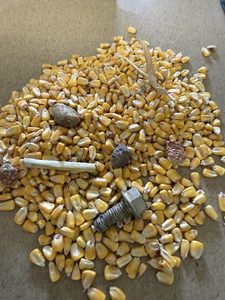
Foreign material includes anything other than a whole corn kernel, such as cobs, stalks, rocks, metal, or other debris. Proper combine settings during harvest can significantly reduce cob and stalk contamination. Rock contamination can largely be avoided by not piling corn on the ground or storing it in bags where contamination risks are higher. Metal contamination is relatively uncommon, but magnets installed on receiving systems and roller mills provide an important safeguard against bolts, hardware, and other metallic objects entering the system.
Equipment such as drum screens or inline screeners can prevent most foreign material from entering storage bins. Scalpers installed ahead of roller mills help keep larger debris from being processed. While stalks often pass through screening systems, cobs can create substantial flowability issues and significantly reduce grinding capacity.
Grain Procurement Policies
A well-designed grain procurement policy typically includes dockage schedules for test weight, moisture, and foreign material. These discounts help discourage lower-quality grain from entering the facility while encouraging the delivery of higher-quality corn. The specific structure of a grain policy often depends on the feed mill’s processing capabilities, drying capacity, and storage limitations. Facility managers, grain purchasers, and owners should work together to establish policies that align with operational goals and desired outcomes.
Mycotoxins
Mycotoxins are the final quality attribute to consider and, by far, the most challenging to manage. Mycotoxins are toxic compounds produced by molds (fungi) that can develop in crops during the growing season and storage. While they can’t be seen with the naked eye, they can have significant impacts on animal health, feed efficiency, and overall production performance. Mycotoxins are estimated to affect roughly 25% of the world’s crops each year and can result in substantial economic losses through reduced animal performance, health challenges, and grain discounts.
One of the biggest challenges with mycotoxins is knowing they’re present. Traditional testing methods at a commercial lab can take 7 to 10 business days from sampling to receiving results. By the time results are available, grain may already be in storage or entering the feed supply. Routine testing throughout harvest can help establish a baseline understanding of regional mycotoxin risk and identify potential issues before they become larger problems.
Three of the most common field-derived mycotoxins found in corn include:
- Deoxynivalenol (DON or vomitoxin): Can reduce feed intake, slow growth, and suppress immune function.
- Zearalenone (ZEA): A reproductive mycotoxin that can contribute to fertility issues and irregular heat cycles.
- Fumonisin: Can impair respiratory and immune health, reducing performance and increasing disease susceptibility.
Early identification of higher-risk grain sources allows producers and feed manufacturers to make informed decisions before contaminated corn enters the feed supply. In years with elevated mycotoxin pressure, working closely with a nutritionist can help determine appropriate management strategies, including ingredient selection, grain sourcing decisions, and the use of mycotoxin mitigation products when needed. Understanding the level of risk in your grain is an important step in protecting pig health, maintaining performance, and avoiding costly surprises later in the production cycle.
Conclusion
As corn is received, routine testing and monitoring help ensure grain is handled appropriately based on its quality characteristics. By evaluating test weight, moisture, foreign material, and mycotoxin risk, feed manufacturers and producers can make informed decisions that support feed quality, pig health, and production performance. Healthy pigs start with quality inputs, making grain quality a critical link between barn health and bottom-line performance.
Pipestone Nutrition now offers mycotoxin screening through new flow cytometry technology. This tool provides faster insight into grain quality, helping producers and feed manufacturers identify potential mycotoxin risks sooner and make more informed management decisions during harvest. Most results are available within 1-2 business days; next-day turnaround may be possible depending on demand. Looking to better understand mycotoxin risk this harvest? Connect with Pipestone Nutrition to learn more, email: pipestonenutrition@pipestone.com.