

Harvest 2025 is wrapped up, and as feed ingredient samples roll into labs, testing is bringing clarity to an otherwise chaotic growing season.
Mother Nature delivered a year of extremes—record rain and humidity in some areas, drought stress in others, and near-perfect conditions elsewhere. That variability makes it difficult to rely on assumptions or historical averages. Instead, the data is telling the story. For regions where crops experienced stress, lab results are showing elevated mycotoxin levels in corn and corn byproducts, including DDGs, across a wider geography than we’ve seen in recent years.
In a season defined by inconsistency, timely testing and accurate data are what allow producers to move from uncertainty to informed, confident feed decisions.
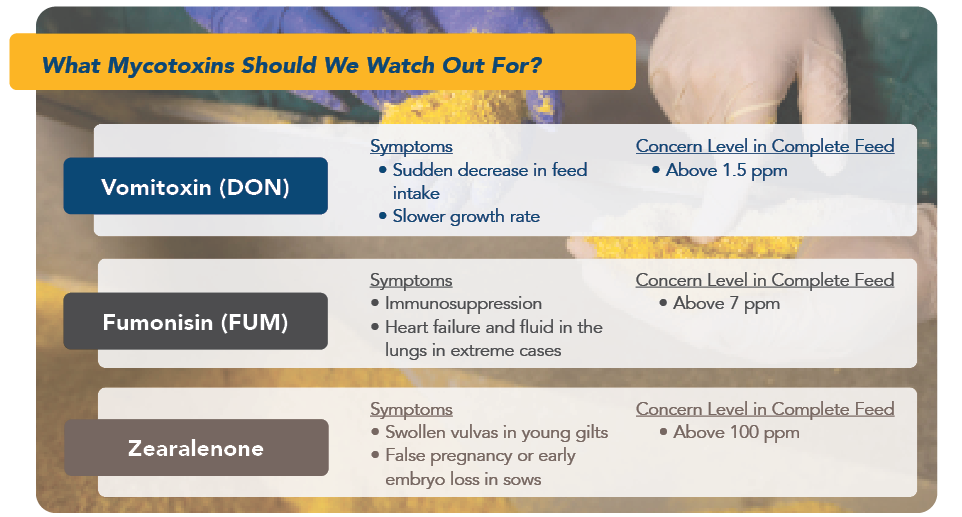
What have we seen?
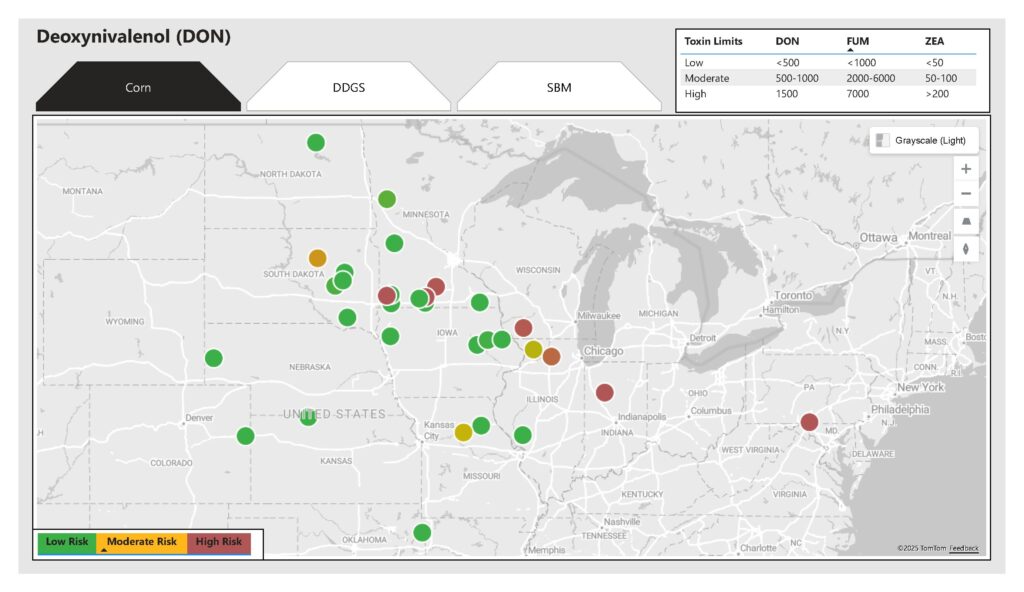
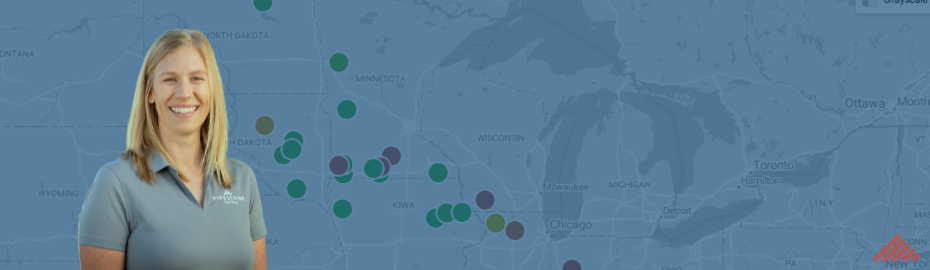
- Elevated levels of DON in corn in Illinois, Indiana, Minnesota, Wisconsin. (Figure1)
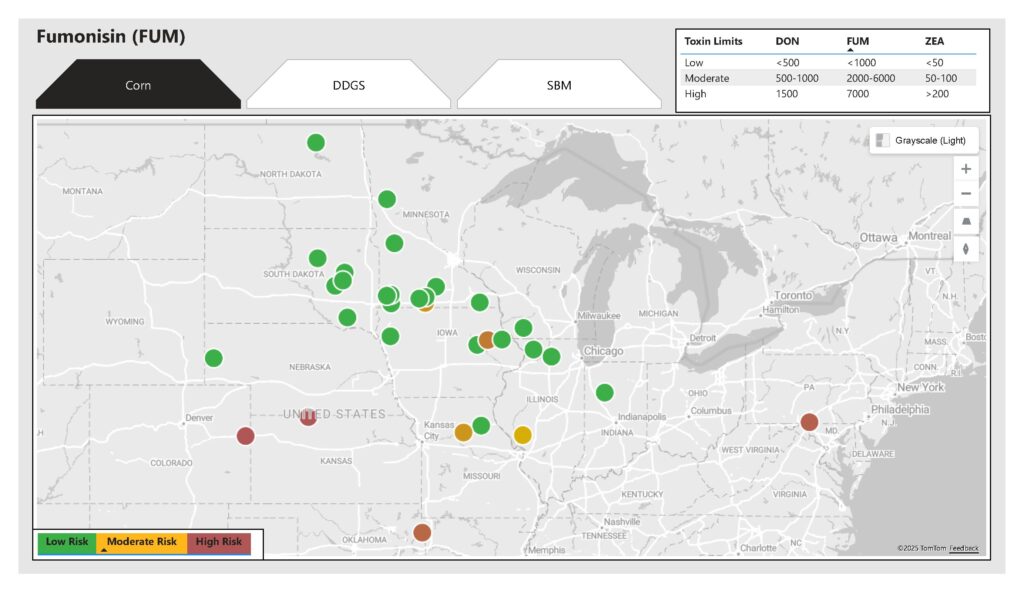
- Moderate levels of FUM in corn in Kansas and Colorado, low levels detected in Missouri and Oklahoma. (Figure 2)
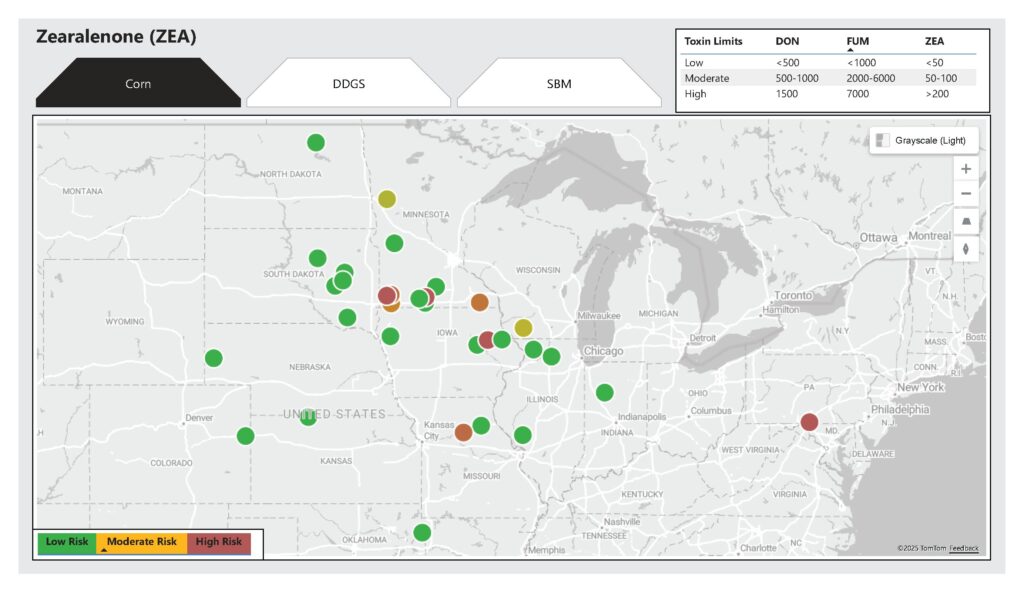
- Zearalenone in corn is at elevated levels in Iowa, Minnesota and Missouri.(Figure 3)
- Keep in mind dried distillers’ grains typically concentrate mycotoxin level by 3 times, and we have seen this to hold true with analyzed samples.
What does this mean for our pigs?
Sometimes you can’t avoid using grain with mycotoxins—but you can take steps to lower the risk:
- Dilution is the Solution!
Blend “hot spot” corn with cleaner corn or add another clean grain/byproduct. This helps bring mycotoxin levels below the threshold that causes problems in pigs. - Feed Clean Grain to Sensitive Groups
Nursery pigs and sows are most vulnerable, so give them the cleanest feed. Finishing pigs can handle slightly higher levels, but still benefit from cleaner diets. - Add a Mycotoxin Binder
Binders help bind to mycotoxins to prevent absorption in the gut. Typically, these are targeted towards nursery pigs and sows and are hard to justify the cost in a feeder to finish pig. Not all binders work on every toxin, so check with your nutritionist to choose the right product for your situation.
Continue to Monitor
Mycotoxins don’t stop at harvest, they can keep growing on corn in storage. Plus, farmers and feed mills pull from different bins throughout the year, which means risk can change over time. Keep collecting and testing composite samples to make sure levels haven’t climbed higher. If they have, you may need to adjust diets or take action. When in doubt, the pig will tell you if they don’t like the feed!