


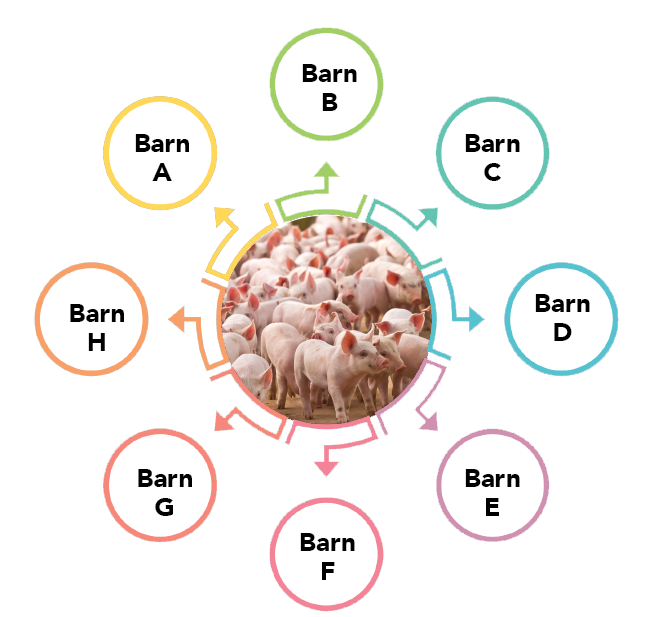
Pig flow, sometimes called the “pig wheel,” is the planned pattern of how pigs move from sow farms to nursery or finishing barns over time. While it may sound simple, getting pig flow right is one of the most important drivers of barn efficiency, pig performance, and overall profitability. Swine production can be chaotic—multiple barns, varying pig ages, labor challenges, and health pressures all collide—but a well-designed pig flow brings clarity to that complexity. Understanding and managing pig flow is critical for any producer or barn operator looking to protect pig health, control costs, and make the most of available space and resources.
Pig flow affects nearly every aspect of a swine operation. Poorly timed placements or overcrowded barns increase stress, slow growth, and can compromise animal health. A clear, organized pig wheel allows pigs to move efficiently through each stage of production, giving staff the time and resources they need to manage barns effectively. Whether you manage your own sow herd, operate a contract finishing site, or receive pigs from a commercial source, establishing a predictable flow provides a roadmap through the day-to-day complexity of swine production.
Planning for Efficient Barn Operations
Effective pig flow starts with understanding your barn and how it operates. Document each site with key details such as barn type, capacity, and desired downtime between groups. This includes everything from the number of pens or rooms available to the labor and equipment needed to handle each group efficiently. Knowing how many pigs your barn can handle, how quickly it can turn, and when each fill should start is the first step toward turning production chaos into clarity.
Wean schedules are a key driver of pig flow. Weekly forecasts of pig availability, whether from your own sow herd or a contracted source, determine how many pigs can be placed in each barn. Maintaining a small buffer—often 5–10% of total capacity—provides flexibility for minor production disruptions and reduces reliance on the open market.
The type of barn and desired turn speed dictate the pattern of fills. Nursery barns may rotate every 42, 46, 49, or 63 days, while wean-to-finish barns typically operate on 168, 175, or 182-day cycles. Aligning your team on turn speeds is crucial, as it affects feed planning, staffing, and barn utilization. Older wean pigs generally allow for faster turns, while younger pigs may require slightly longer cycles. By understanding these dynamics and planning proactively, producers can impose order on the inherent chaos of swine production, maximizing efficiency and animal performance.
Communication is critical once the flow schedule is set. Sharing the plan with everyone involved ensures delivery order, frequency, head counts, and group sizes are clear and executable. Many producers use online or printed schedules to track upcoming deliveries, monitor pig health, and review barn performance metrics. Regularly updating the flow schedule keeps the team coordinated and allows adjustments when unexpected challenges arise. In other words, a clear pig wheel transforms uncertainty into a predictable rhythm for the operation.
The Financial Impact of Smooth Pig Flow
Managing pig flow effectively has tangible financial consequences. Every day of lactation lost or delayed placement can cost roughly $0.75 per pig on the finishing side. For a barn receiving 15,000 pigs annually, being off by just one day on average throughout the year can result in more than $11,000 in lost revenue.
Poor flow doesn’t just hit the bottom line—it magnifies operational chaos. Overcrowded barns increase disease risk and stress, slowing growth and driving up labor and medication costs. Conversely, a well-planned flow keeps pigs healthier, improves growth rates, and helps labor run more smoothly. A clear, organized schedule allows staff to anticipate workloads, manage resources efficiently, and respond quickly when challenges arise.
Smooth pig flow ultimately benefits everyone. Pigs move efficiently, staff can manage barns effectively, and producers see improved performance and lower costs. By creating clarity in the chaos, a well-designed pig wheel turns daily uncertainty into predictable outcomes. Whether you operate a sow farm, a contract finishing site, or manage pigs from multiple sources, understanding and managing pig flow is essential for long-term success.
Structured Pig Flow, Stronger Biosecurity
The Pig Wheel does more than organize pig flow—it plays a critical role in protecting herd health. A consistent rotation helps reduce disease risk in wean-to-finish barns by:
- Maintaining proper stocking density: On-time deliveries prevent overcrowding, reducing stress and supporting stronger immune function.
- Allowing thorough cleaning: Predictable gaps between groups ensure barns are fully cleaned and disinfected before the next load arrives.
- Preventing cross-contamination: Staying on schedule avoids unplanned mixing of groups and maintains separation between age groups.
- Improving staff compliance: A predictable flow allows crews to follow biosecurity protocols consistently with equipment, tools, and traffic flow
- Limiting outside exposure: Knowing arrival times helps reduce unnecessary visits during higher-risk periods.
In short, the Pig Wheel provides the structure needed for clearer decisions, better execution, and stronger biosecurity.