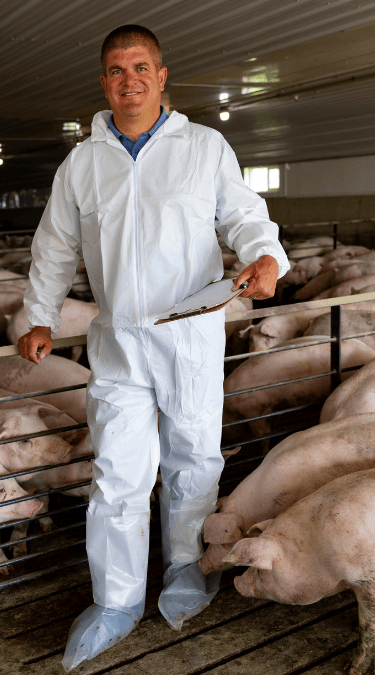
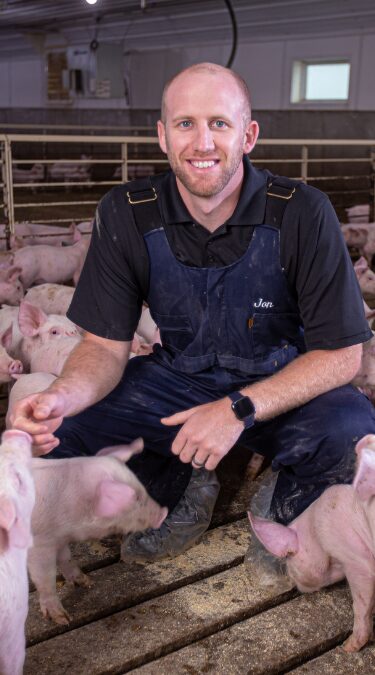



Though previously undefined or under-defined, sustainability is a concept that has been known long and well in the community of agricultural producers. Maximizing resources, reducing waste, using efficient practices and responsible stewardship of the land are not new concepts to those of you reading this. However, understanding that each of those factors results in an industry that is way ahead of the sustainability game is something that is only now being brought into the eye of the public. This report is intended to show the Pipestone commitment to sustainability and the ways in which we wish to be an industry leader to those ends.
Sustainability Report
Sustainability Report 2022

Keep Reading

Pipestone Journal
Fall 2026 – Barn to Bottom Line: Focus on Health
Healthier pigs mean healthier farms—and stronger bottom lines.Pipestone was founded as a veterinary clinic, and 84 years later, health remains our lifeblood and at the heart of what we do every day. In this issue of the Pipestone Journal, we’re connecting animal health, biosecurity, and financial health. These aren’t separate conversations. They’re deeply connected.
Read This Issue

Pipestone Journal
Summer 2026 – Small Things. Big Impact.
At Pipestone, our mission is to Help Farmers. Sometimes that means solving big, complex challenges. Other times it means identifying the small things that make a real difference. The articles in this Journal explore decisions that can have an outsized influence on health and performance.
Read This Issue
Sustainability Report
Sustainability Report 2025
Honoring generations of agricultural stewardship, Pipestone remains committed to caring for animals, supporting our people, and protecting natural resources—an ongoing journey highlighted in our 2025 Sustainability Report.
Read This Issue

Pipestone Journal
Winter 2026 – Clarity in Chaos
Today’s production environment is filled with variables we can’t control: disease pressure, market volatility, feed risk, labor challenges, and global uncertainty. When stress is high and information is incomplete, chaos can creep in quickly. The operations that perform best aren’t reacting in the moment—they’ve already planned for it.
Read This Issue